In general manufacturing, the oven often decides whether a coating adheres, a bond holds, a part is dry enough for the next step or a resin reaches its final properties. Drying, curing, preheating and post-cure are routine steps in plants making metal and plastic parts, electrical and electronic assemblies and finished goods.
These plants need dependable ovens that heat the load evenly, repeat the same cycle every shift, are easy to operate and keep energy costs under control. We build our process ovens around your parts, racks and trolleys to do exactly that.
Why the thermal step matters
The oven usually sits between other operations: after washing and before coating, after bonding and before assembly, after moulding and before dispatch. A cycle that is too short, too cool or uneven rarely shows at once. It appears later, often after more value has been added, as poor adhesion, a weak bond, trapped moisture, tacky, under-cured resin or distortion.
A material responds to its own temperature, not to that of the air around it, so the oven and the cycle are designed around the part.
Typical processes
- Drying: removing water from parts after washing, and water or solvent from coatings, impregnated parts and bulk materials
- Adhesive and resin curing: structural bonding, potting and encapsulation, and resin impregnation
- Preheating: bringing parts, inserts, blanks or materials to a uniform temperature before coating, bonding, moulding, welding or assembly
- Post-cure: completing the cure of moulded, cast and bonded parts so that resins, elastomers, silicones and adhesives reach their full properties
- Coating cure: powder coatings, liquid paints and functional coatings, plus dry-off before coating
What to consider when specifying an oven
The specification starts with the load, not a catalogue size:
- Temperature uniformity across racks, trolleys and fixtures, checked in a typical load
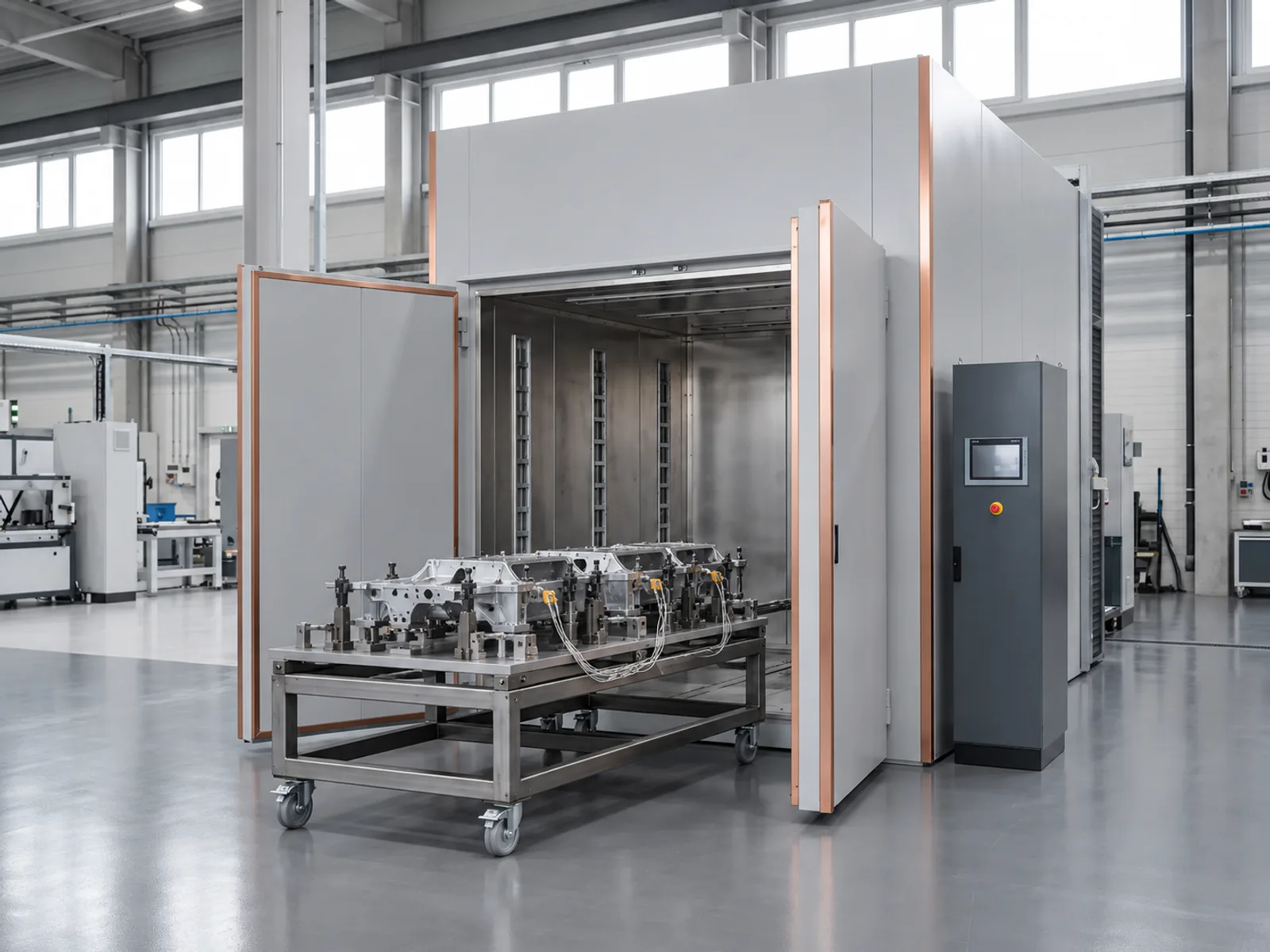
- Part temperature: part thermocouples where the cure or preheat schedule is defined at part temperature
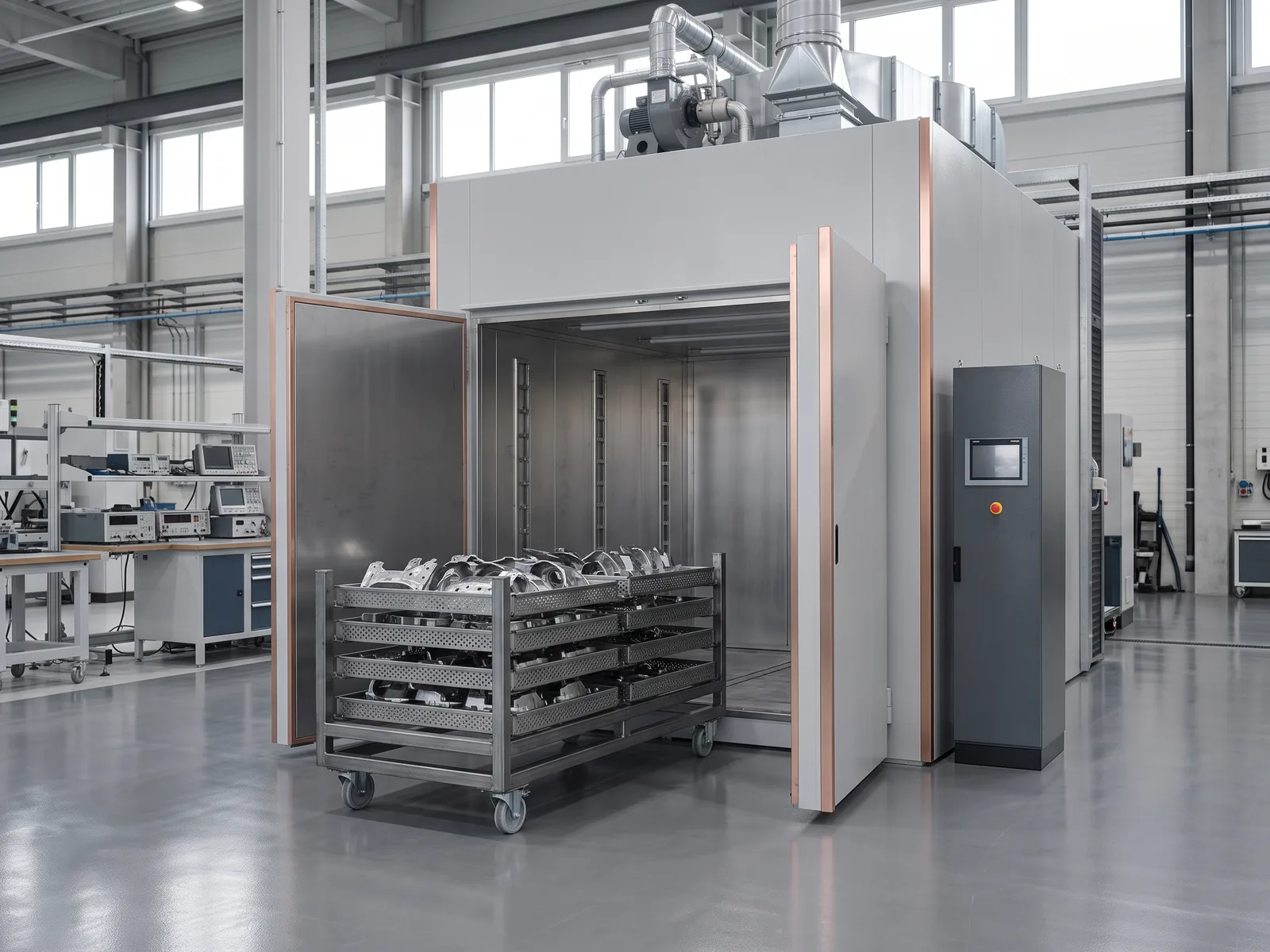
- Loading: shelves, trolleys, baskets or hanging fixtures, sized for the largest and heaviest load
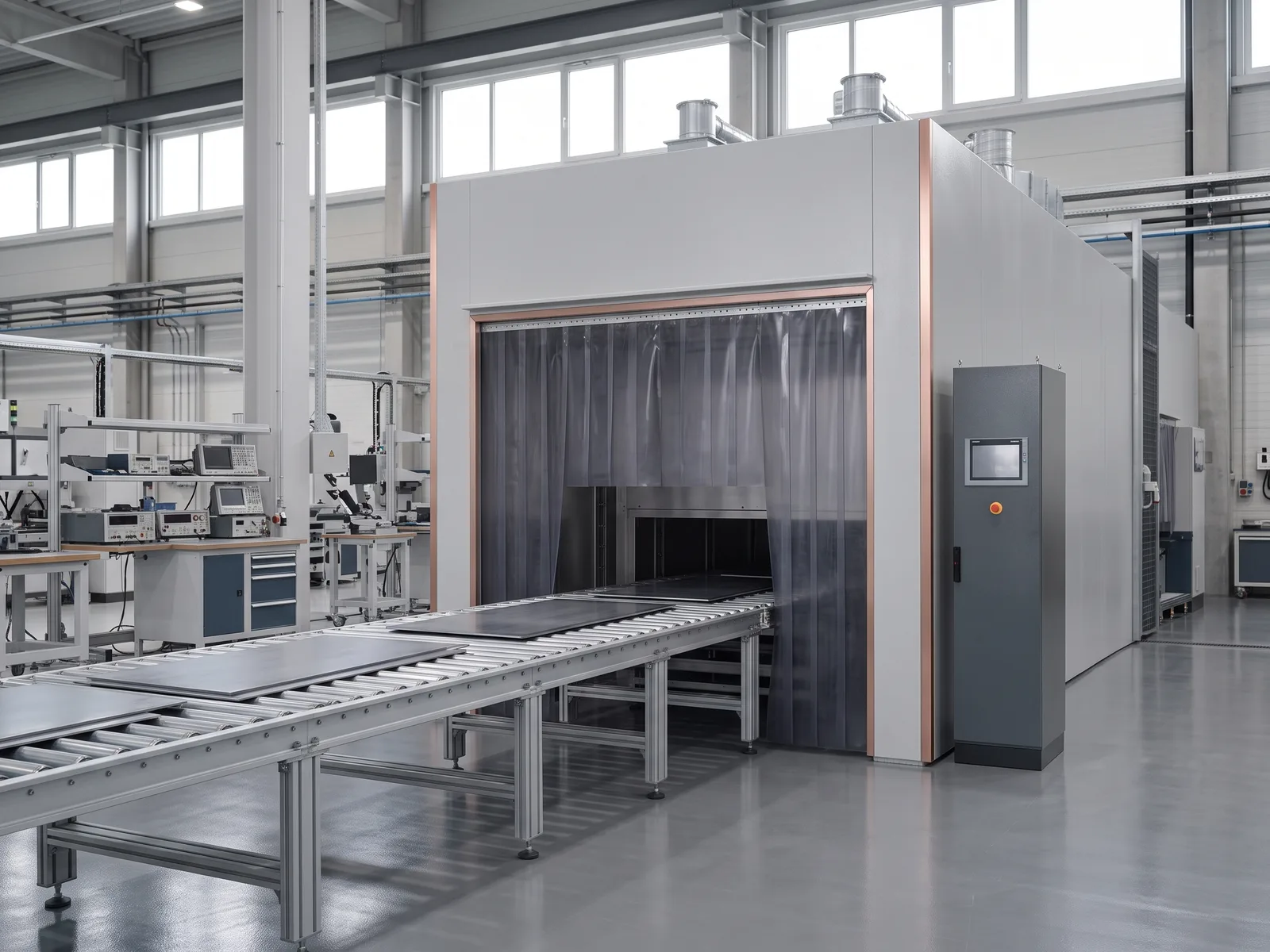
- Throughput and flow: batch ovens for mixed production, pass-through ovens for one-way flow, conveyor ovens for continuous lines
- Records: cycle data logging and batch reports where each cure or bond must be documented
- Exhaust and safety: moisture extraction for drying; purge, exhaust and airflow monitoring where solvents or volatiles are released
- Operation and energy: stored recipes, good insulation and seals, frequency-controlled fans, scheduled preheat and stand-by
Requirements and standards
No single standard covers general manufacturing. Requirements usually come from three sources, and we review those that apply with you in the process review:
- Machinery safety: ovens placed on the EU or Turkish market are generally treated as machinery and must carry the CE marking. EN 746 and, where flammable substances such as solvents are released, EN 1539 are often referenced.
- Quality management: under ISO 9001 and similar systems, processes whose result cannot be fully verified on the finished part, such as curing and bonding, are usually validated and then kept under control with suitable measuring equipment, calibrated where required, and records.
- Customer and material specifications: cure schedules in adhesive, resin and coating datasheets, customer drawings and your customers' supplier quality manuals.
Which ION ovens fit
Industrial Drying Ovens, Adhesive & Resin Curing Ovens and Preheating Ovens, shown below, cover the most common tasks; Post-Cure Ovens and Paint & Coating Curing Ovens complete our Industrial Process Ovens range. For other loads or material flows, Custom Thermal Systems such as Pass-Through Ovens or Conveyor & Continuous Ovens are designed around your production.
How we support you
Every project starts with a process review of your parts, materials, cycles, throughput and required standards; our engineers design the system around the resulting specification. We install and commission the oven, train your operators and, where your quality system requires it, calibrate instruments and carry out temperature uniformity surveys (TUS). Preventive maintenance, spare parts and remote support help keep production running, and retrofit and modernisation can upgrade existing ovens, including those from other manufacturers.