
In aerospace and defence, how a part was made matters as much as how it measures. Customers expect every part to follow an approved process, and curing or heat treatment is a defined step in it: the right temperature, for the right time, with records to prove it.
Our ovens and furnaces are built for this work, with tight temperature uniformity, control based on part thermocouples, integrated vacuum for out-of-autoclave (OOA) curing on vacuum models and complete cycle records that support customer and regulatory audits. We supply equipment for structural parts, interior components and the tooling used to make them.
Why curing and heat treatment matter
A composite laminate depends on a complete, controlled cure. A ramp that is too fast, a soak below temperature or a lost vacuum can leave porosity or under-cured resin: defects that often mean a scrapped part. Heat-treatable aluminium alloys reach their specified strength only when aged at the correct temperature for the correct time, machined and welded parts often need stress relief to stay dimensionally stable, and bonded assemblies rely on adhesives cured within their specified window.
Typical processes
- Prepreg and OOA composite curing under vacuum bags
- Post-cure of composite parts
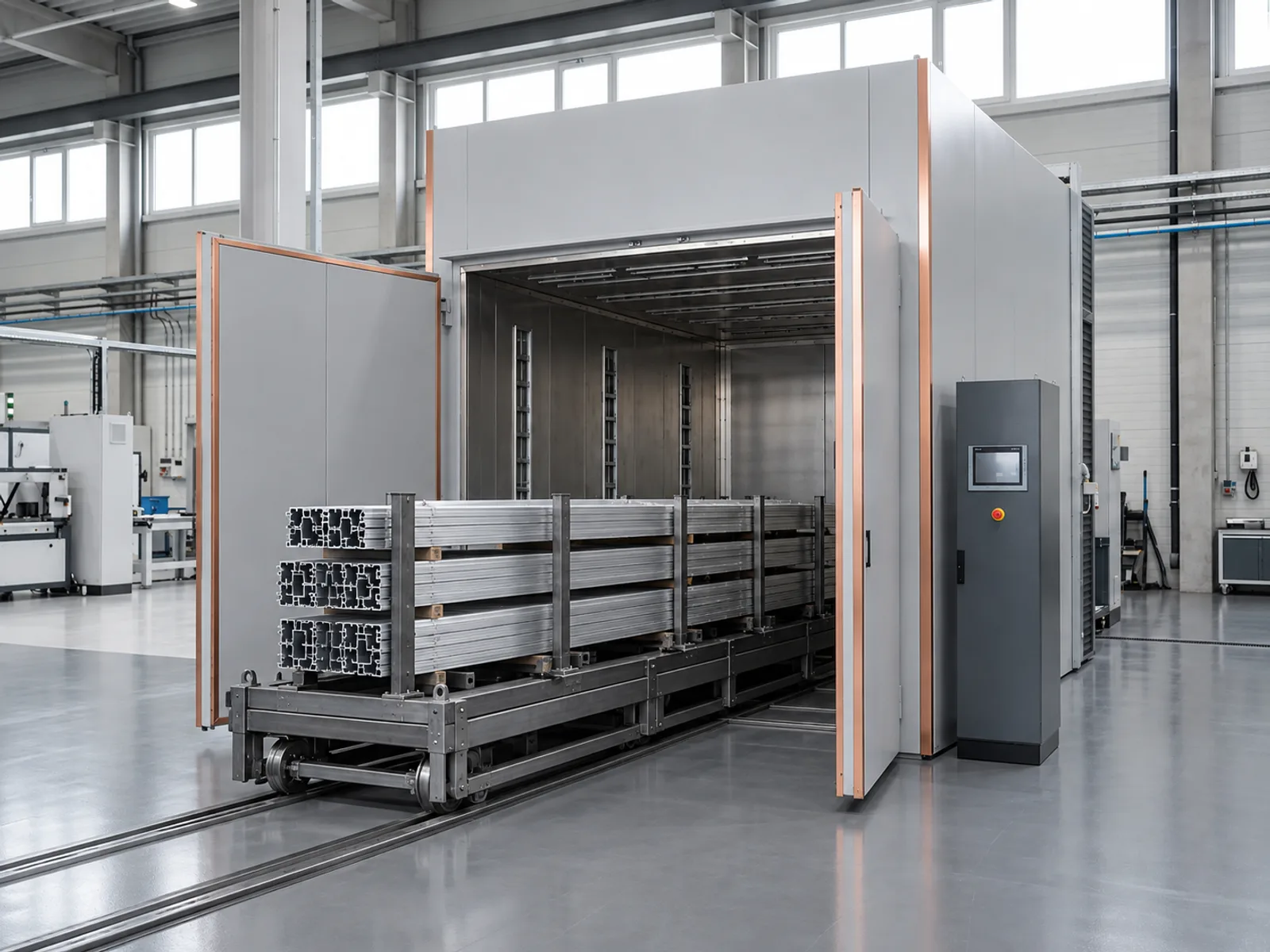
- Artificial ageing (precipitation hardening) of aluminium parts
- Stress relief of machined parts and welded assemblies
- Adhesive bonding cures for structural and interior assemblies
- Curing and conditioning of tools and moulds
What to look for in an oven or furnace
These points usually decide whether an oven will meet your customers' requirements:
- Temperature uniformity across the work zone, within the tolerance your specifications set
- Control to the parts: part thermocouples and lead-lag control, so ramps and soaks follow the parts rather than the air
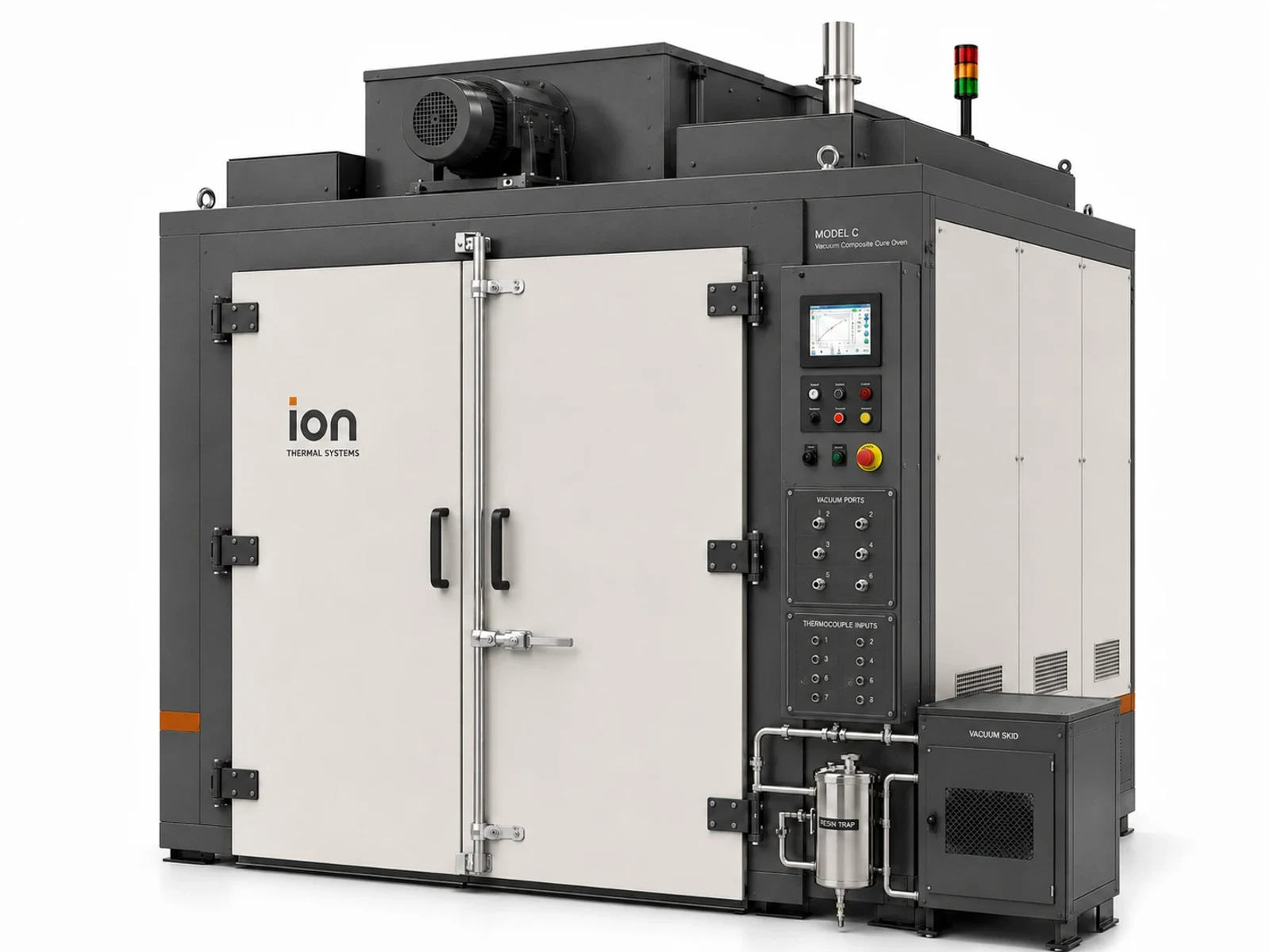
- Per-port vacuum monitoring with leak alarms on OOA ovens
- Instrumentation and survey thermocouple ports that make calibration, system accuracy tests (SAT) and temperature uniformity surveys (TUS) practical
- Recipes protected by user levels, and batch reports combining temperature, vacuum and alarm data for each part or lot
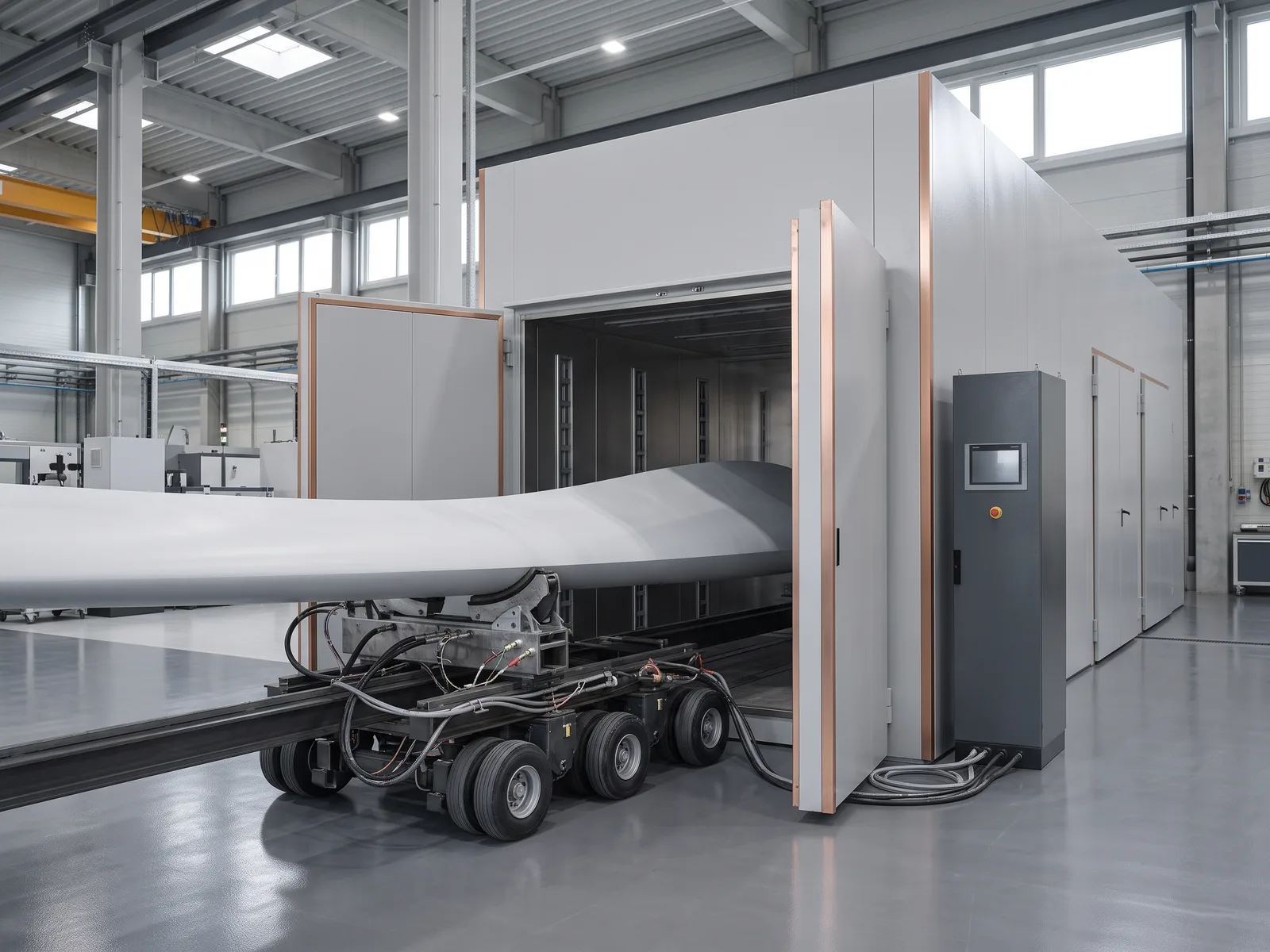
- Chamber size and handling (trolleys, rails or load cars) for long or bulky tools
- Independent over-temperature protection, exhaust for resin volatiles and well-insulated construction to limit energy use
Standards your customers may require
Aerospace heat-treating equipment is commonly operated to the pyrometry requirements of AMS 2750, an SAE Aerospace Material Specification, and heat treaters are often assessed in Nadcap heat-treating audits; some customer specifications apply similar requirements to composite curing. Many suppliers operate quality management systems to AS9100 (EN 9100), and defence programmes add their own customer and contract specifications.
Pyrometry requirements such as AMS 2750 govern how you run, test and document your equipment in production; they are not a one-off certificate for an oven. Name the applicable standards and their revisions in your request for quotation. In the process review we agree the furnace class, instrumentation type, survey scope and record formats with you, and design the system to support them.
ION products for aerospace and defence
Model C — Vacuum Composite Cure Oven / OOA Oven is designed for vacuum-bagged parts, while Model B — Standard Composite Cure Oven covers cures that do not need integrated vacuum. Aluminium Ageing Ovens handle precipitation hardening, and Custom Composite Ovens are engineered around long spars, large tools or multi-zone cures. Composite Mould Heating Ovens, Adhesive & Resin Curing Ovens, Post-Cure Ovens and, for large parts, Bogie-Hearth Stress-Relief Furnaces complete the range.
How we support you
Every project starts with a process review of your parts, materials, specifications and documentation needs. Our engineering team designs the system in-house, with 3D design reviews before manufacturing; we then install and commission it on site, run acceptance tests and train your team. Our Calibration & Temperature Uniformity Testing, Preventive Maintenance, Remote Support and Spare Parts services help keep it running within specification, while Retrofit & Modernisation can upgrade the controls, data logging and safety systems of existing ovens, including those from other manufacturers.