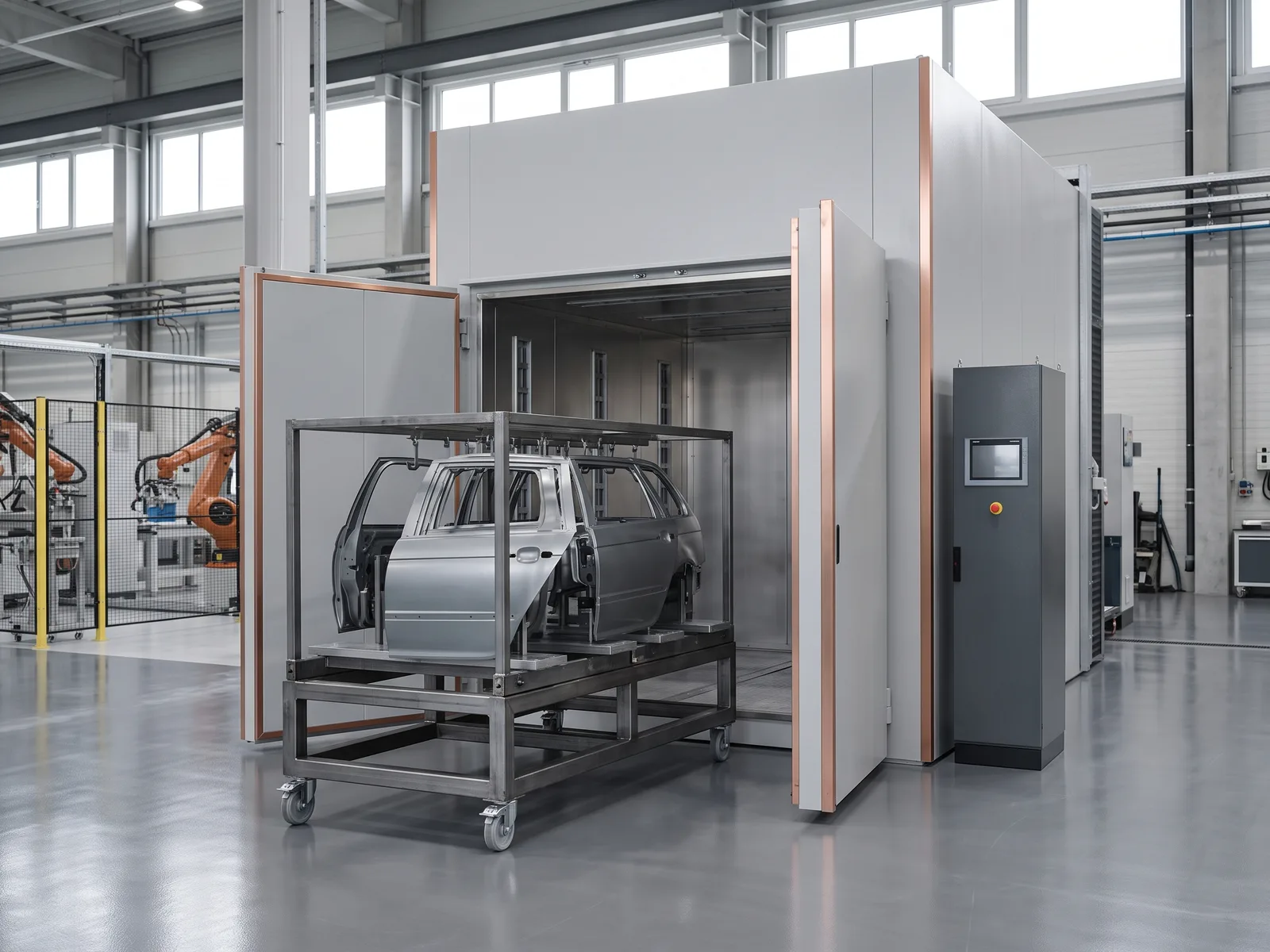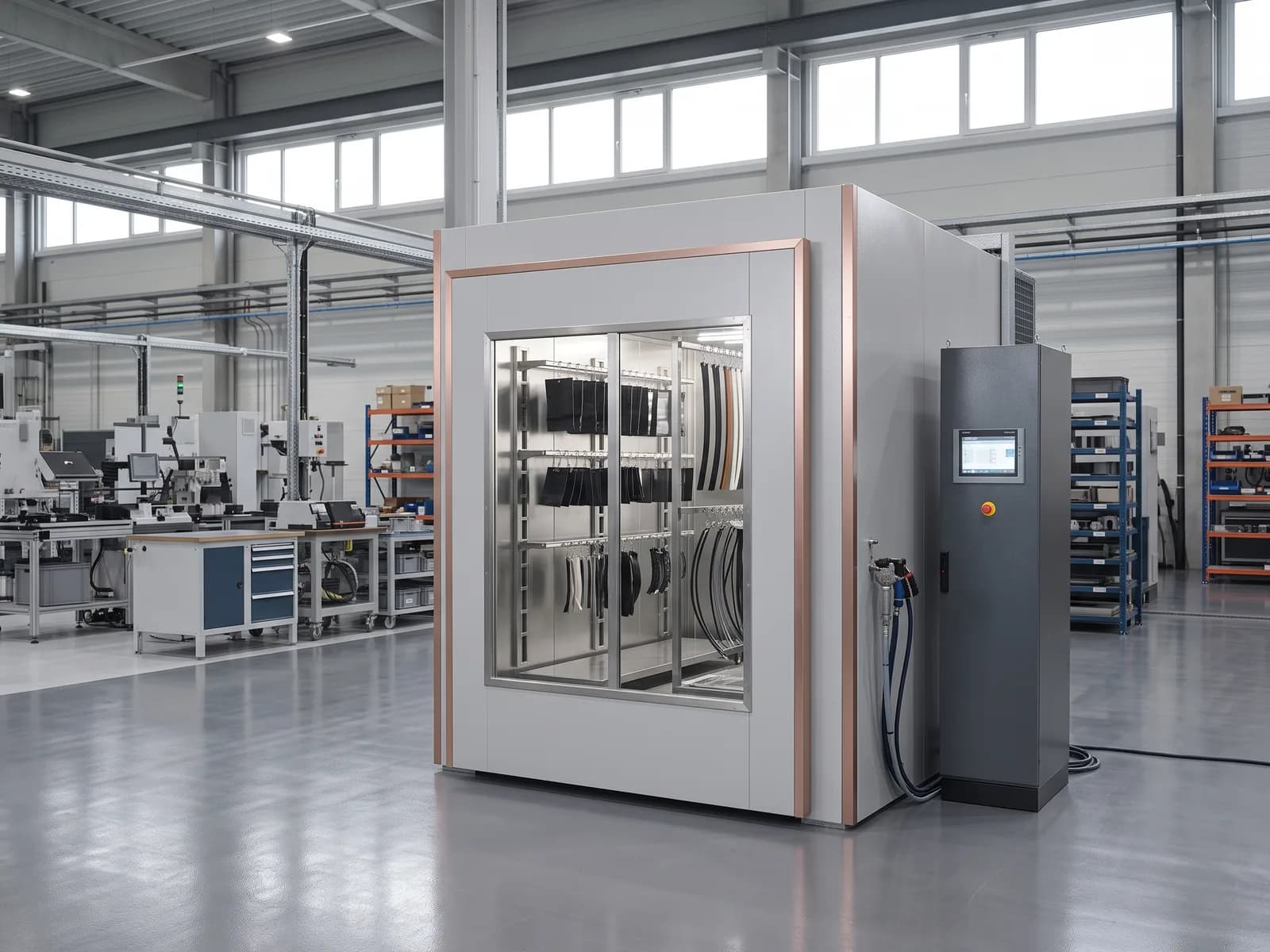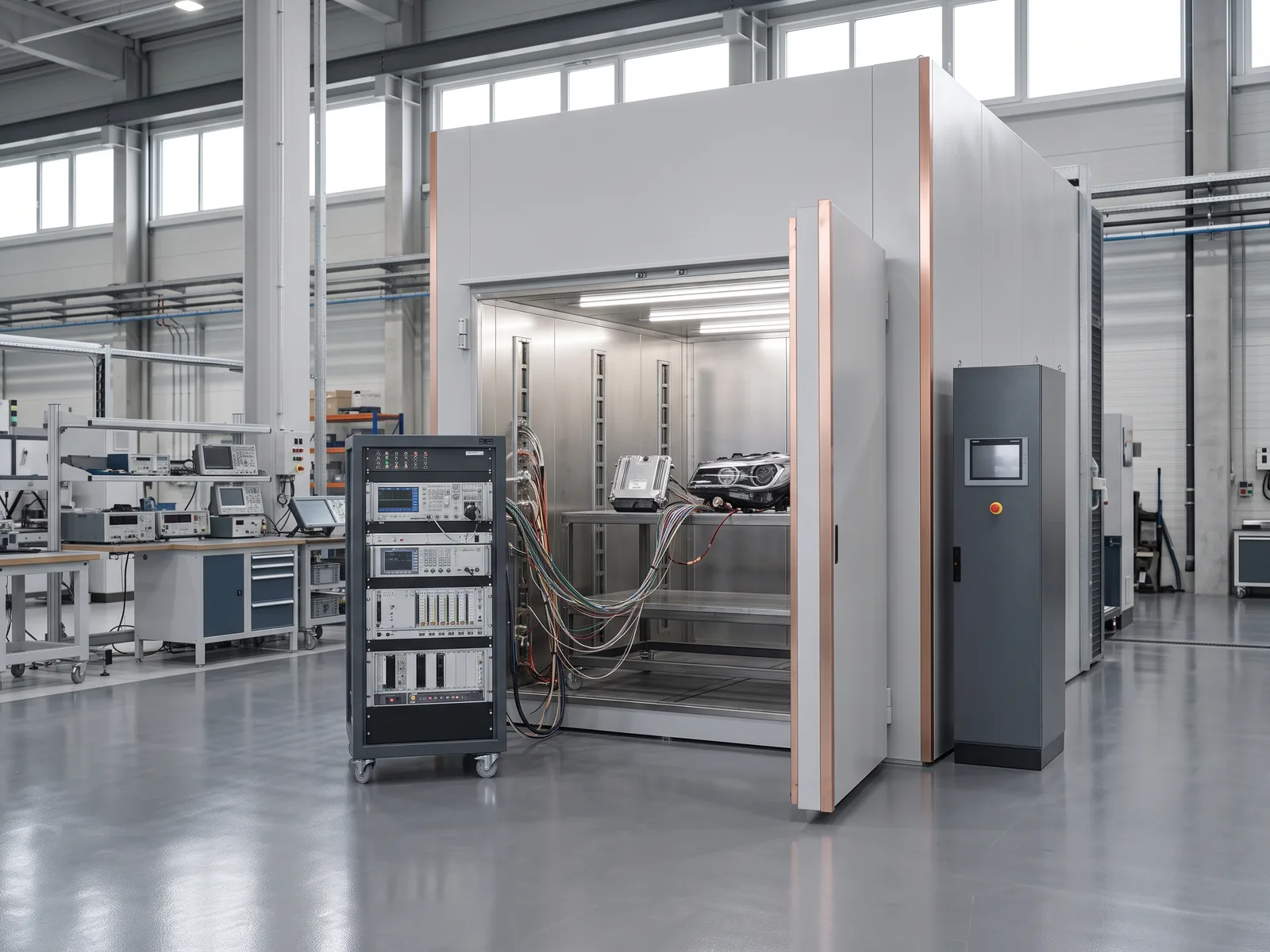
In automotive production, many quality-critical steps happen in an oven. An under-cured adhesive, a coating that never reached its cure temperature or a test run at the wrong temperature can lead to scrap, field failures or unreliable test results.
We design ovens for repeatable cycles at high utilisation, built around your parts, your takt time and the records your customers expect.
Why the thermal step matters
Adhesives, sealants and coatings reach their specified strength and adhesion only when the part itself stays at cure temperature for the required time. Heavy fixtures, dense racks and parts of different mass heat at different rates, so a cycle timed on air temperature alone can leave part of the load under-cured.
In validation laboratories, results are only comparable when temperatures stay stable and are recorded throughout long tests.
Typical processes
- Adhesive and sealant curing for bonded body parts and assemblies
- Coating cure: liquid paint, powder and functional coatings on components
- Post-cure of composite, cast-resin and elastomer parts
- Adhesive and potting cures for electrical and electronic assemblies
- Tool preheating: injection moulds, die-casting dies, press tools and inserts
- Aluminium ageing and tempering of hardened steel parts
- Thermal ageing tests of polymers, elastomers, cables and harnesses
- Heat-soak and functional testing of components at temperature
What to look for in an automotive oven
Each of these points affects the design, so clarify them early:
- Part temperature: load thermocouples on the fastest- and slowest-heating parts, so the soak time starts when the parts, not just the air, reach temperature
- Uniformity: across racks, fixtures or the conveyor, verified by a temperature uniformity survey (TUS) where your specification requires one
- Throughput: a batch, pass-through or conveyor layout matched to your takt time, with fast recovery after door openings
- Recipes and records: a recipe per part number with change history, and batch reports exported as PDF or CSV or sent to your MES
- Safety: exhaust, purge and, where required, LEL monitoring for solvent-bearing products; safety interlocks for powered testing
- Energy: efficient insulation, frequency-controlled fans and stand-by modes for ovens that run every shift
Industry requirements and standards
Many automotive suppliers work within an IATF 16949 quality management system. Process parameters are defined in the control plan and approved with the part through the production part approval process (PPAP), so changing a cure or heat treatment cycle may require customer approval.
Suppliers that heat-treat parts are commonly asked to complete the CQI-9 Heat Treat System Assessment published by AIAG, which includes pyrometry requirements such as instrument calibration, system accuracy tests (SAT) and temperature uniformity surveys (TUS). The CQI-12 Coating System Assessment, also from AIAG, does the same for coating processes.
None of these certifies an oven: they govern how you run and document your process. We review the standards and customer-specific requirements that apply to you in the process review, and design instrumentation, ports for survey thermocouples and records to support them.
ION solutions for automotive
Automotive Component Curing Ovens are designed for bonded, sealed, coated and composite parts, complemented by Paint & Coating Curing Ovens, Adhesive & Resin Curing Ovens and Post-Cure Ovens. Mould & Tool Heating Ovens and Tool Preheating Ovens prepare tools for changeover, while Aluminium Ageing Ovens and Tempering Furnaces cover metal heat treatment. Thermal Ageing Ovens and Automotive Test Ovens serve validation laboratories, and Pass-Through Ovens, Conveyor & Continuous Ovens and Integrated Thermal Process Cells link the oven to your production line.
How we support your project
- Process Review: your parts, materials, cycle, takt time and quality requirements, turned into a clear specification
- Engineering & System Design: mechanical, thermal, electrical and control design in-house
- Installation & Commissioning: on-site installation, acceptance tests and operator training
- Calibration & Temperature Uniformity Testing: at commissioning and at regular intervals
- Preventive Maintenance, Spare Parts and Remote Support: keeping the system running reliably
- Retrofit & Modernisation: new controls and data logging for existing ovens, including those from other manufacturers