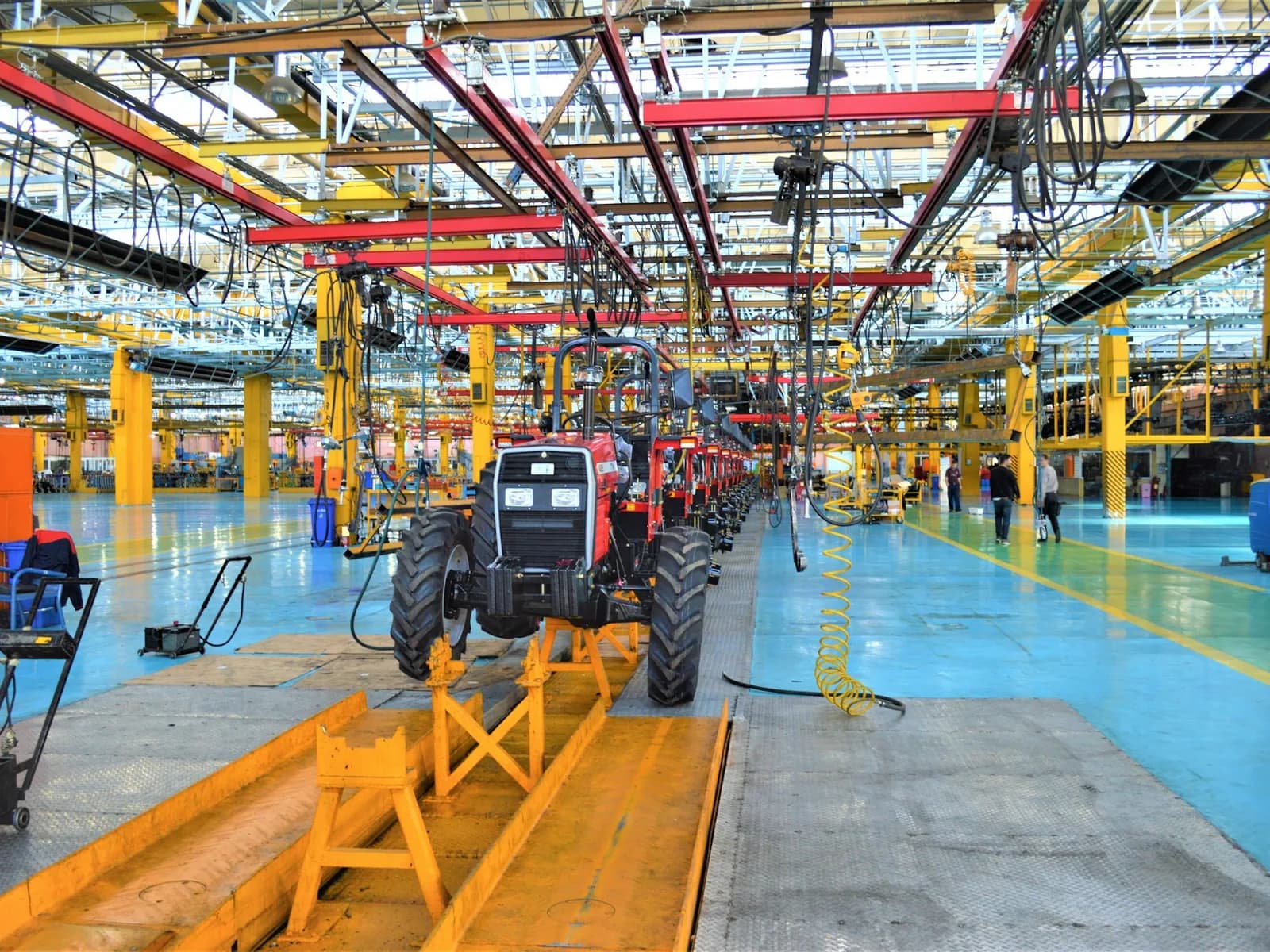
Excavator and loader frames, crane booms, gearbox housings, press frames and heavy castings are large, heavy parts; the welded ones often combine plates of very different thicknesses. Many pass through a furnace or oven before machining, painting or assembly, and that step shows later in their dimensional accuracy, toughness and corrosion protection.
We build bogie-hearth furnaces, large-format ovens and paint and coating curing ovens around these loads and their specified cycles.
Why the thermal step matters
Welding leaves residual stresses. Left in place, they can make a frame or housing move during machining, taking bores and mounting faces out of tolerance. Stress relief heats the weldment below the steel's transformation range, holds it and cools it at a controlled rate, reducing these stresses with minimal distortion.
Tempering gives hardened pins, shafts and wear parts the toughness to withstand shock loads. Preheating thick sections before welding slows cooling and reduces the risk of cracking. Painted parts working outdoors need a correctly cured coating for adhesion and corrosion protection.
Typical processes
- Post-weld stress relief of frames, booms, arms and other large weldments
- Stress relief of heavy castings and machined parts
- Tempering of hardened pins, shafts, gears and wear parts
- Preheating of thick sections before welding
- Liquid paint and powder coating cure
- Drying after washing or pretreatment, before painting
What to consider when specifying a furnace or oven
- Size, weight and handling: the largest part sets the chamber and door size, and the heaviest load the load-car capacity; any rails or pits are prepared to the project drawings.
- Throughput: stress-relief cycles are long, so the weekly volume sets the size of each load.
- Uniformity across thick and thin sections: multi-zone control, effective door and car-to-chamber sealing and a burner or heater arrangement suited to the load.
- Load temperature, not air temperature: thermocouples on the thickest and thinnest sections show when the whole part is at temperature, so the soak starts at the right time and heating and cooling rates follow the specification.
- Load support: supports that keep heavy parts from sagging at temperature without blocking the heat.
- Documentation: cycle records with load thermocouple data, ready to hand over with the parts.
- Energy and safety: over long cycles, insulation, sealing and the heating method drive operating cost; interlocks, independent over-temperature protection and, in paint ovens, solvent extraction are designed in.
Requirements and standards
Heat treatment requirements usually come from the drawing, the welding procedure specification (WPS), the applicable code or the customer's specification, which set temperatures, heating and cooling rates and soak times. Welding quality standards such as ISO 3834 cover post-weld heat treatment, including its specification and records; parts built to pressure equipment codes such as EN 13445 or ASME Section VIII follow those codes' heat treatment rules.
Some customers also require instrument calibration and temperature uniformity surveys (TUS), sometimes based on the pyrometry requirements of CQI-9 or AMS 2750. Coating cures are usually defined by the paint specification and the coating manufacturer's datasheet, as time at part temperature.
We review the standards that apply to your parts in the process review, so that instrumentation, thermocouple ports and records support them from the start.
ION products for heavy machinery
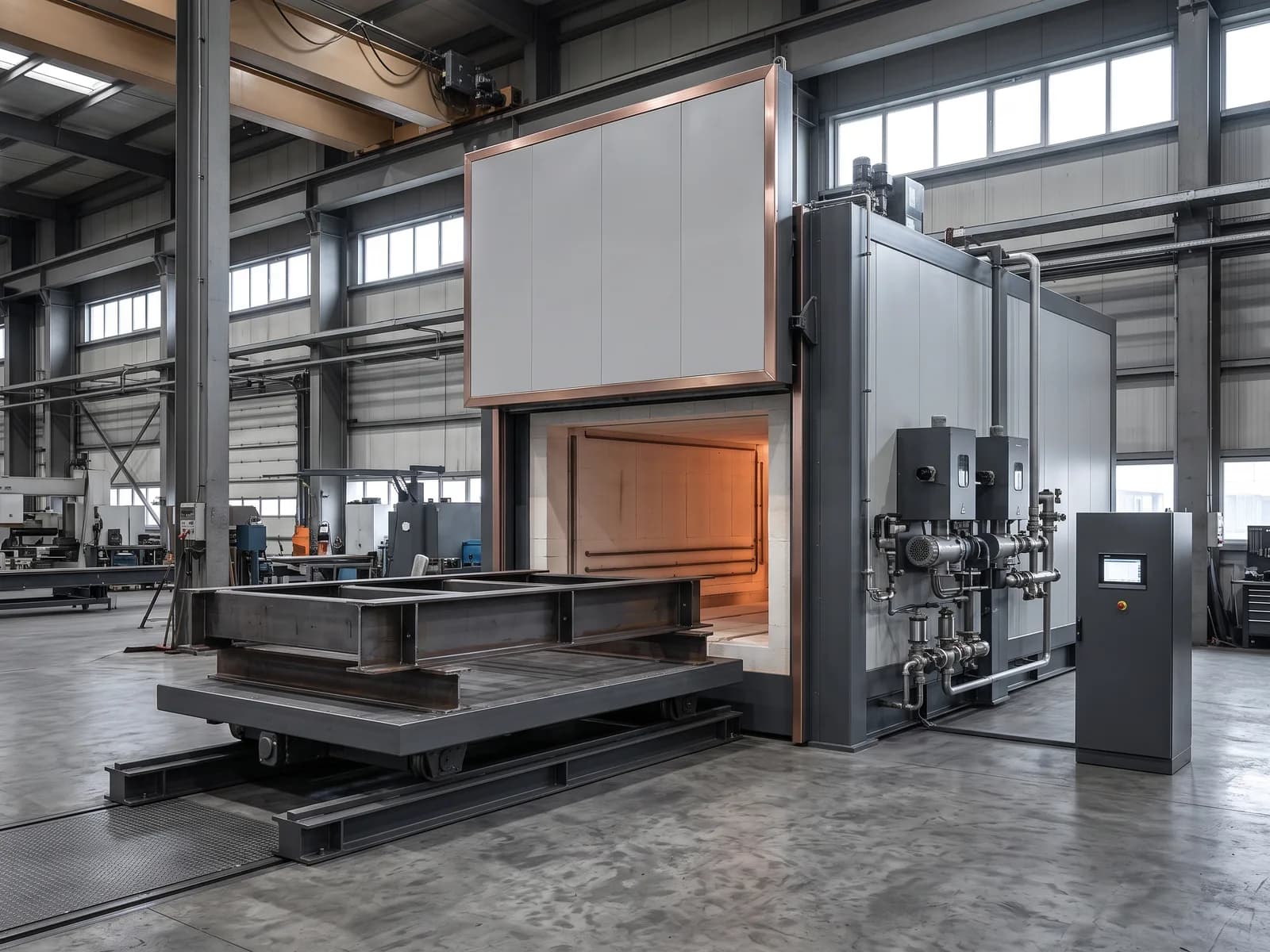
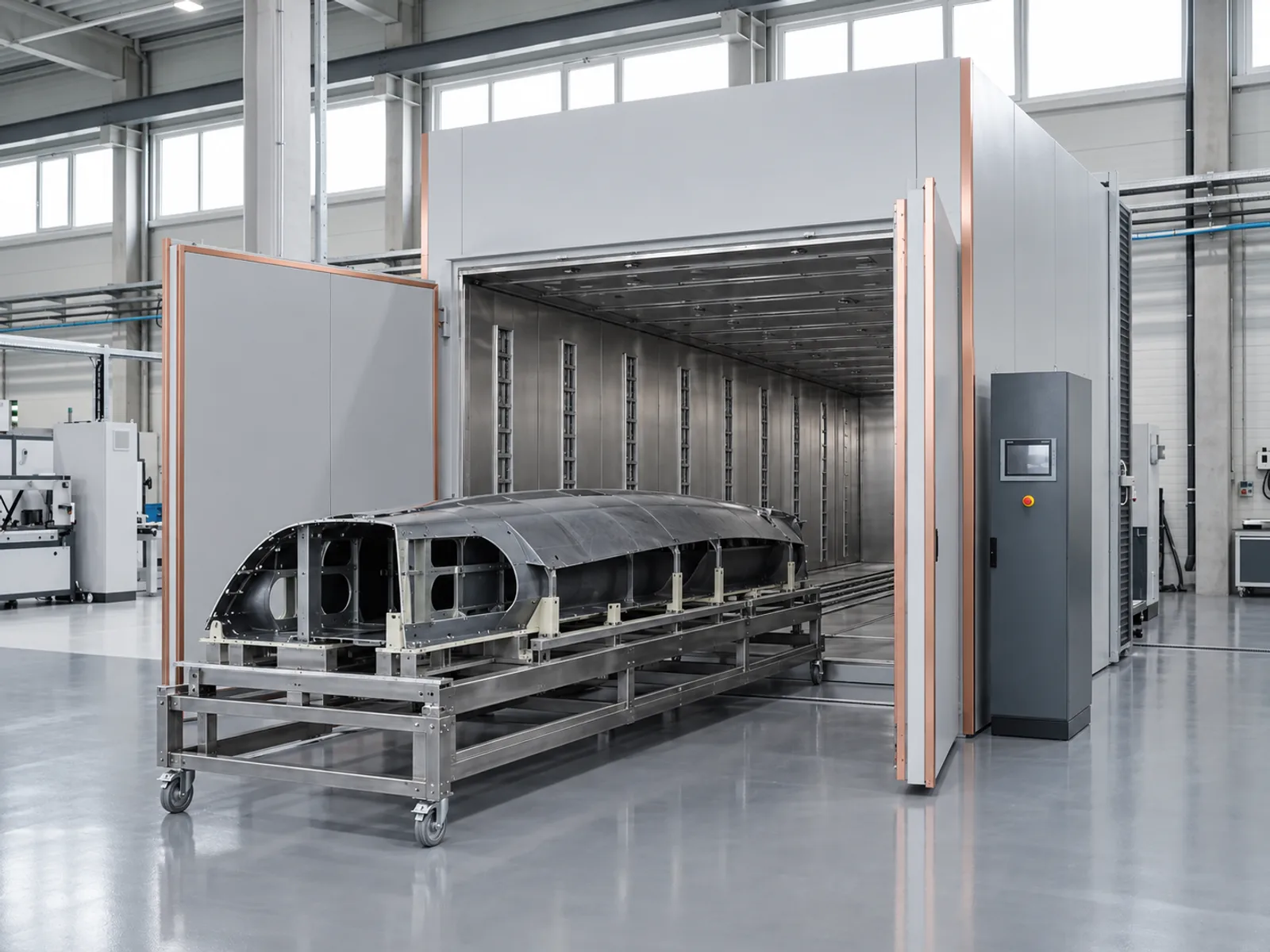
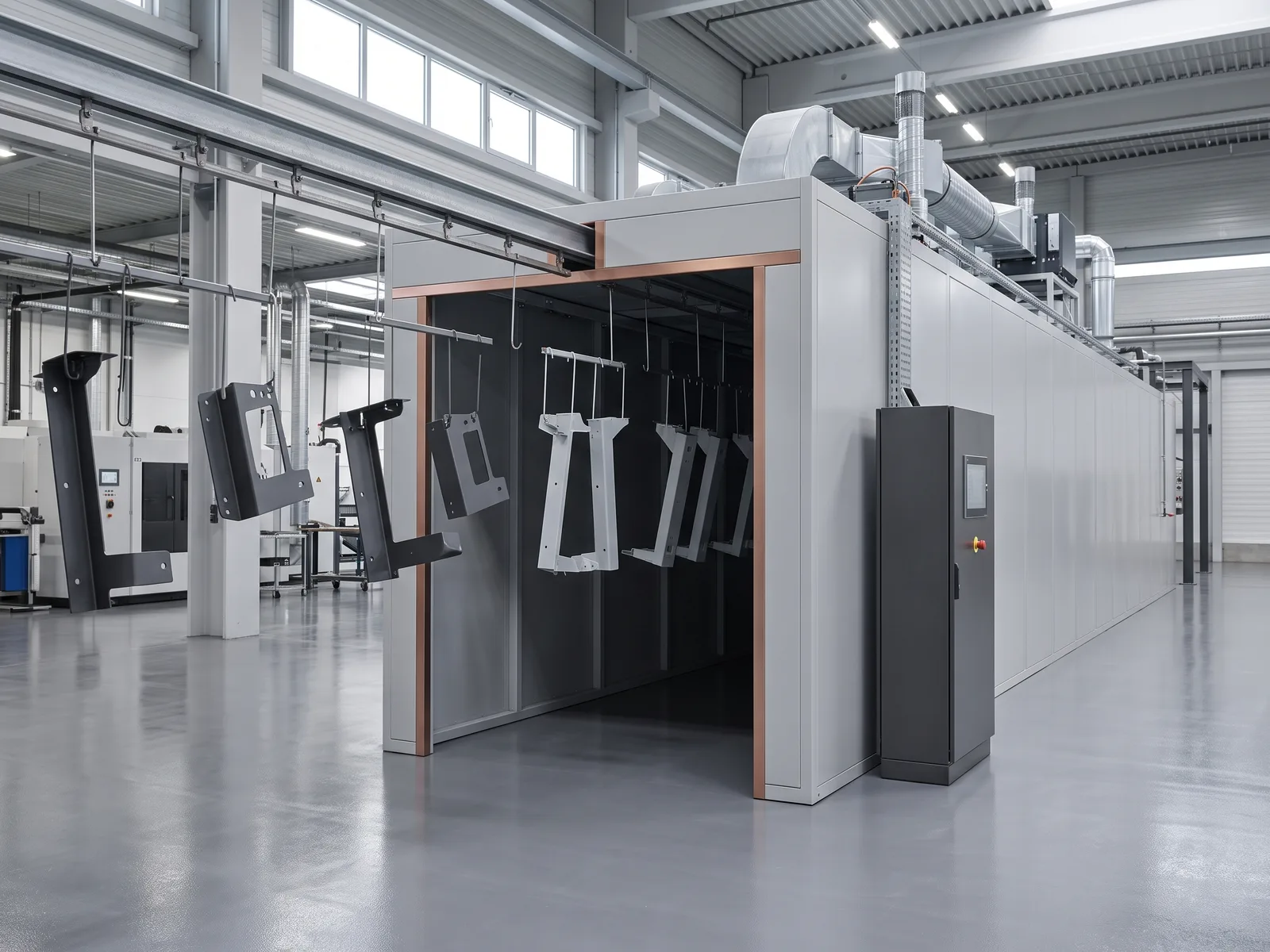
Bogie-Hearth Stress-Relief Furnaces are the standard solution for large weldments: the load is craned onto a motorised car outside the furnace and driven in, with multi-zone control and load thermocouples. Large-Format Ovens provide walk-in and drive-in chambers for very large structures, and Paint & Coating Curing Ovens cure liquid paint and powder coatings in batch or conveyor layouts. Tempering Furnaces, Metal Preheating Furnaces and Annealing Furnaces complete the range.
How we support your project
Every project starts with a Process Review of your parts and specifications, followed by:
- Engineering & System Design, with 3D design reviews of the system in your plant
- Installation & Commissioning, including acceptance tests and operator training
- Calibration & Temperature Uniformity Testing at commissioning and at regular intervals
- Preventive Maintenance, Spare Parts and Remote Support
- Retrofit & Modernisation of existing furnaces and ovens, including other manufacturers' equipment