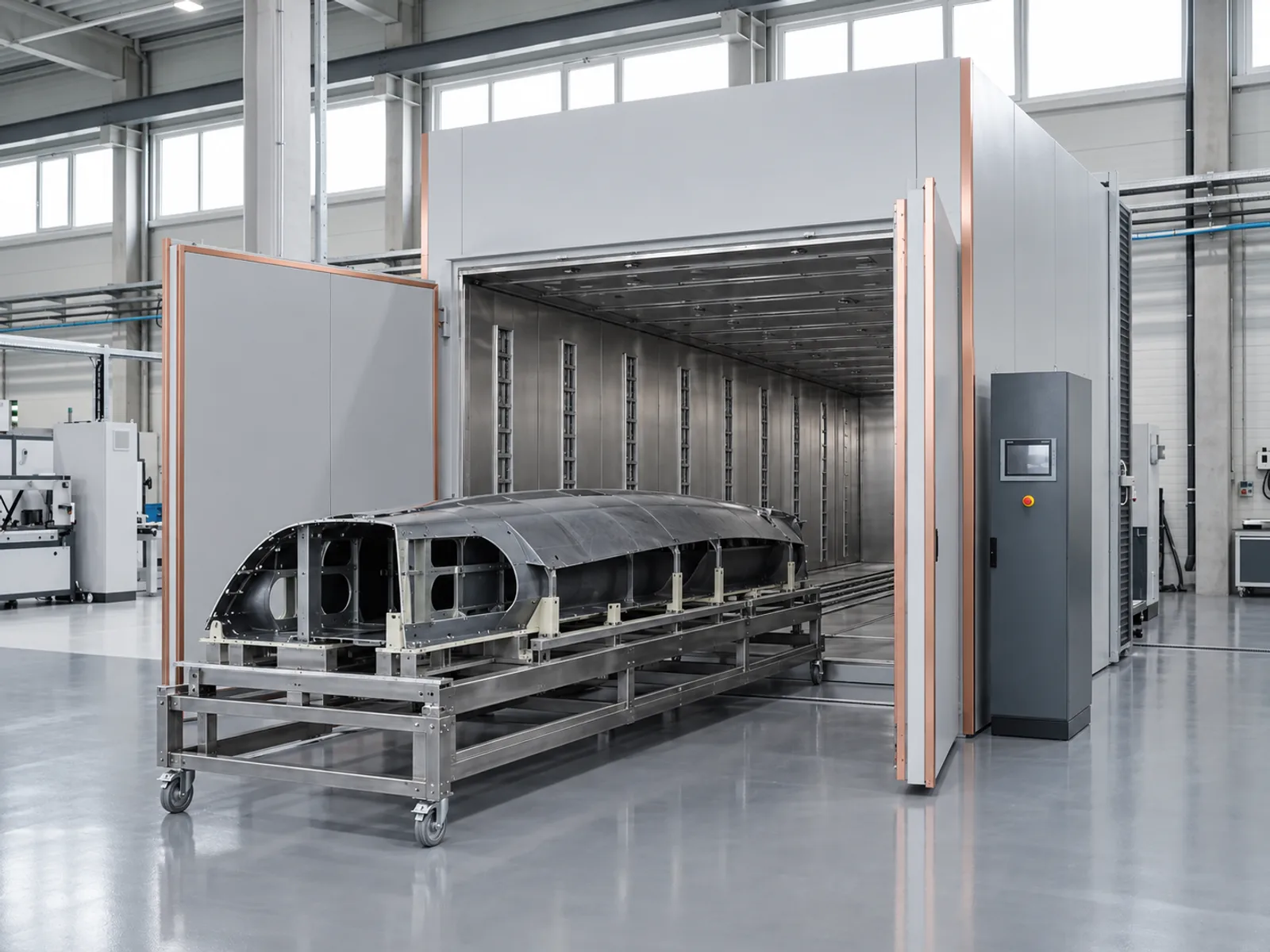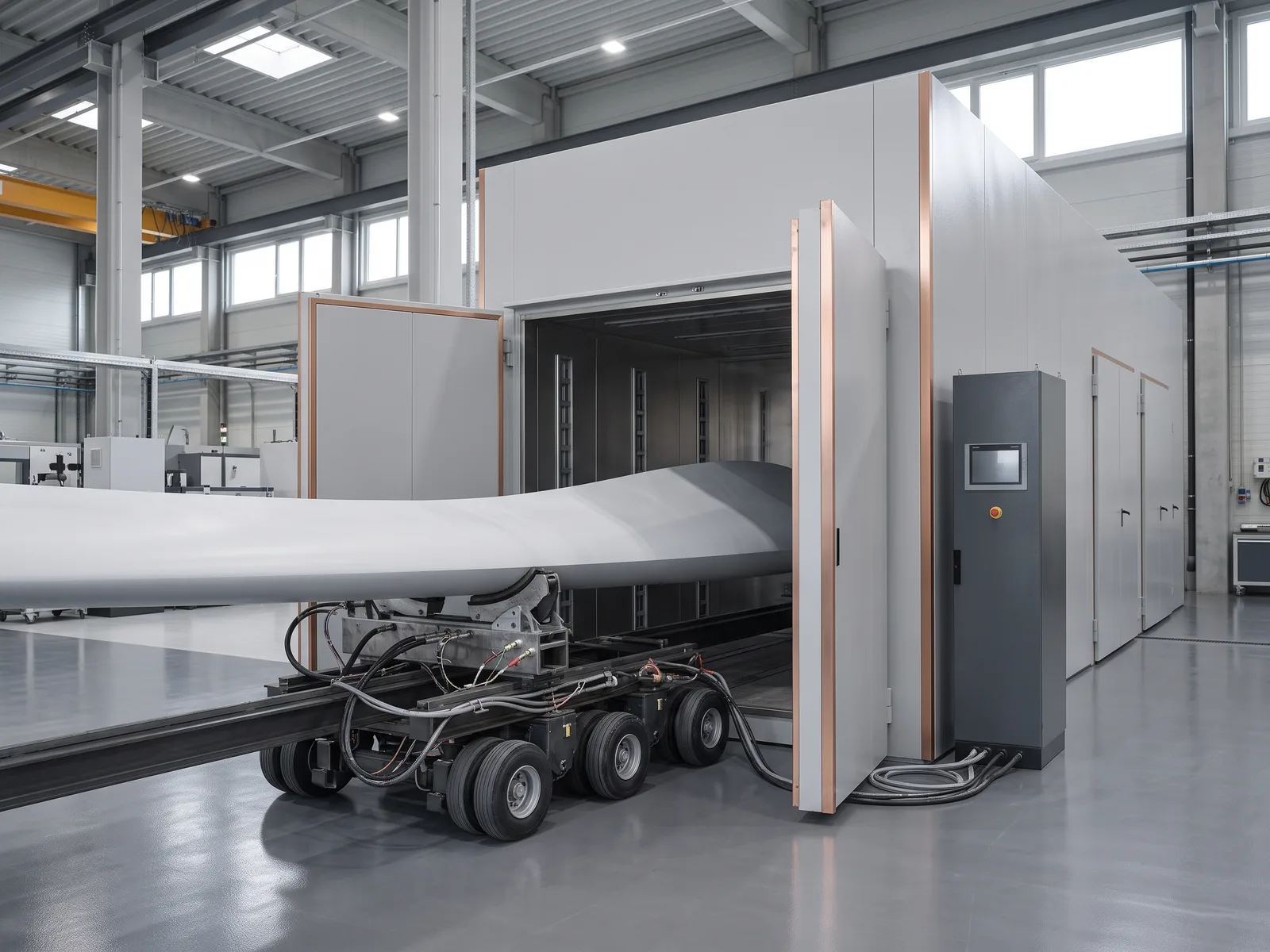
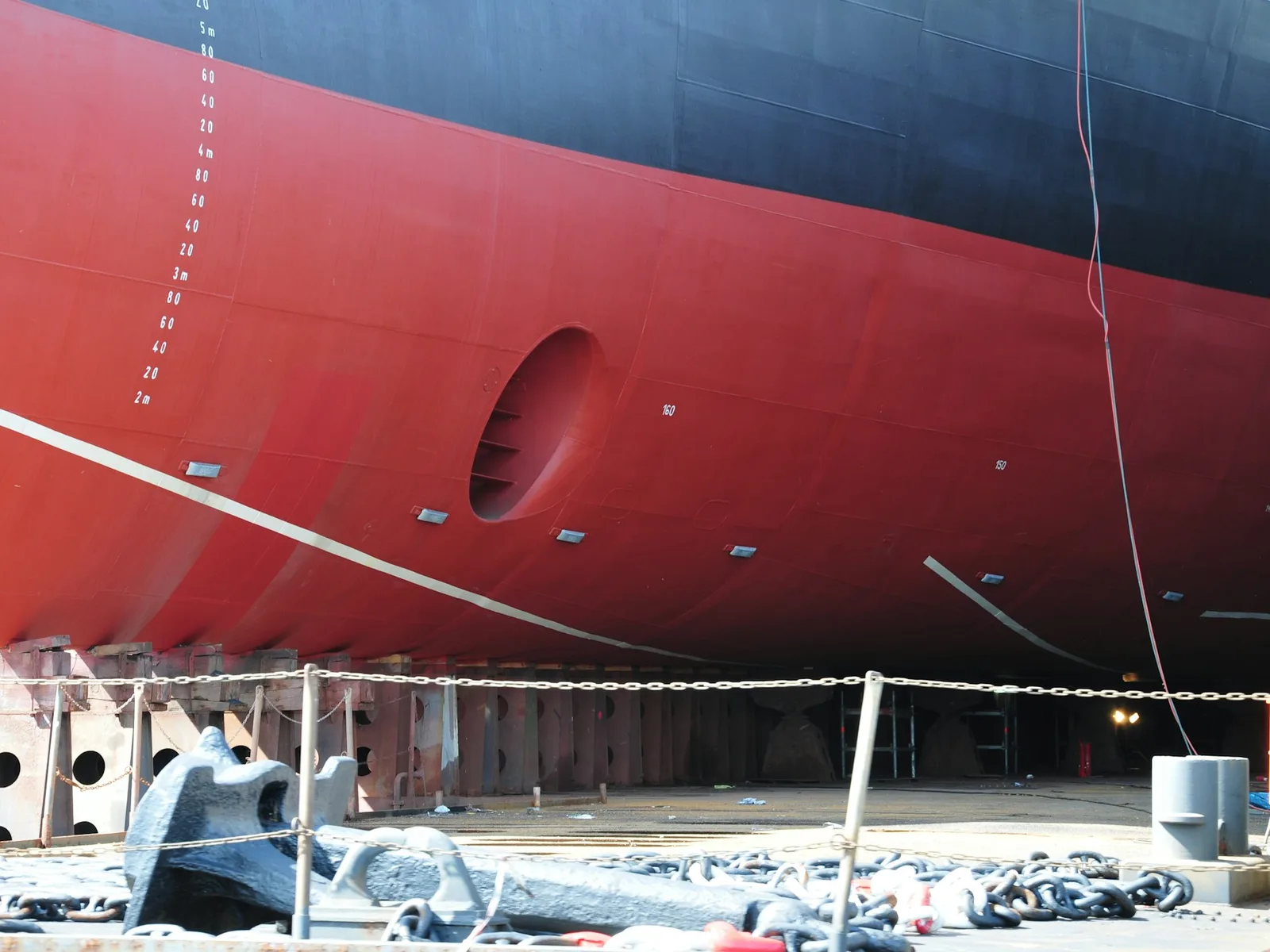
Boat hulls and decks, rail interiors and vehicle body panels are large, often composite, and typically built in low to medium volumes with a changing part mix. The oven has to fit the part and deliver the same cure from end to end.
We build large-format and custom composite ovens around these parts, plus post-cure, adhesive curing and coating ovens for vessel and vehicle components.
What is heated and why it matters
Boatbuilders laminate hulls, decks and superstructures in glass-reinforced plastic (GRP) or, for performance craft, glass or carbon fibre with epoxy. Rail and vehicle builders use composite interior panels, cab fronts, bonded assemblies and coated metal parts.
Temperature and time decide how fully a resin or adhesive cures, and with it the part's strength, stiffness and heat resistance. Polyester and vinyl ester laminates often cure at room temperature but benefit from a controlled post-cure; epoxy infusion systems usually need an elevated-temperature post-cure, and prepregs a defined heated cure cycle. A cooler area of a large part can be left undercured even when the controller shows the right air temperature.
Typical processes
- Curing of large composite parts such as hulls, decks, superstructures and body panels
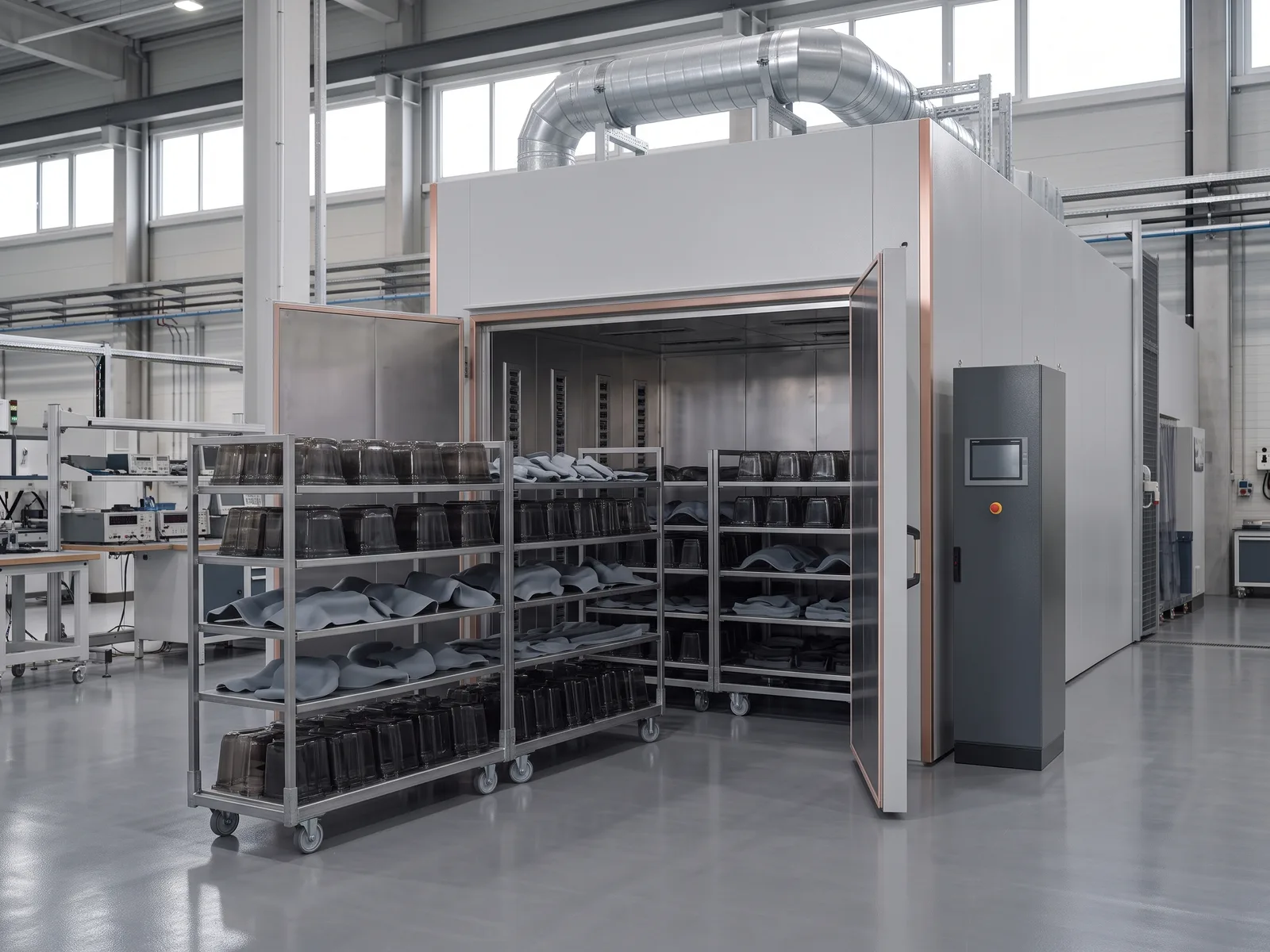
- Post-cure of infused and hand-laid laminates and other moulded parts
- Out-of-autoclave (OOA) curing of vacuum-bagged prepreg parts
- Curing and conditioning of composite moulds
- Heat-accelerated curing of structural adhesives in bonded assemblies
- Curing of liquid paint, powder and protective coatings
What to consider when specifying an oven
- Chamber and loading: walk-in or drive-in chambers sized for the longest part and its mould, with trolley, rail or load-car loading
- Uniformity along the full length: multi-zone heating and control, with airflow arranged for long or tall loads
- Part temperature: heavy moulds and thick laminates lag behind the air, so the cycle follows part or tool thermocouples
- Ramp rates: controlled to limit stress in moulds and sandwich cores and to help manage exotherm in thick laminates
- Exhaust and safety: extraction and purge sized for styrene, coating solvents or phenolic resin emissions, with lower explosive limit (LEL) monitoring for flammable vapours
- Records: cycle data and batch reports linked to the hull, part or serial number
- Energy: insulation, door seals, frequency-controlled fans and stand-by modes for intermittent use
Industry requirements and standards
Requirements depend on the vessel or vehicle and the market. Most standards cover materials, procedures and documentation rather than the oven, which must still deliver the conditions and records they rely on. In the process review we check which standards and customer specifications apply, and how control, recording and temperature uniformity testing will support them. Common examples:
- Marine: classification society rules; the society approves materials and production procedures and may require curing conditions to be documented
- Recreational craft: the EU Recreational Craft Directive (2013/53/EU), with hull construction commonly assessed to ISO 12215
- Rail: fire behaviour of materials and components to EN 45545-2, adhesive bonding to EN 17460 (the successor to DIN 6701) and quality management to ISO/TS 22163
- Buses and commercial vehicles: UN Regulation No. 118 on the burning behaviour of materials in buses and coaches, with suppliers often expected to work within IATF 16949 quality management systems
Suitable ION products
Large-Format Ovens and Custom Composite Ovens are the usual choice for hulls, decks and long panels. Post-Cure Ovens suit batches of smaller moulded and bonded parts, and the Model C vacuum composite cure oven covers vacuum-bagged prepreg parts. Mould heating, adhesive curing and coating ovens serve moulds, bonded assemblies and coated components; pass-through or conveyor ovens suit panels produced in series.
How we support you
Every project starts with a process review of your parts, resin systems, moulds, cycles and standards. Engineering is done in-house, with 3D design reviews showing how the oven fits into your plant. Installation and commissioning include operator training, and calibration and temperature uniformity surveys are documented for your quality system. Preventive maintenance, remote support, spare parts, and retrofit and modernisation of existing ovens complete the service.