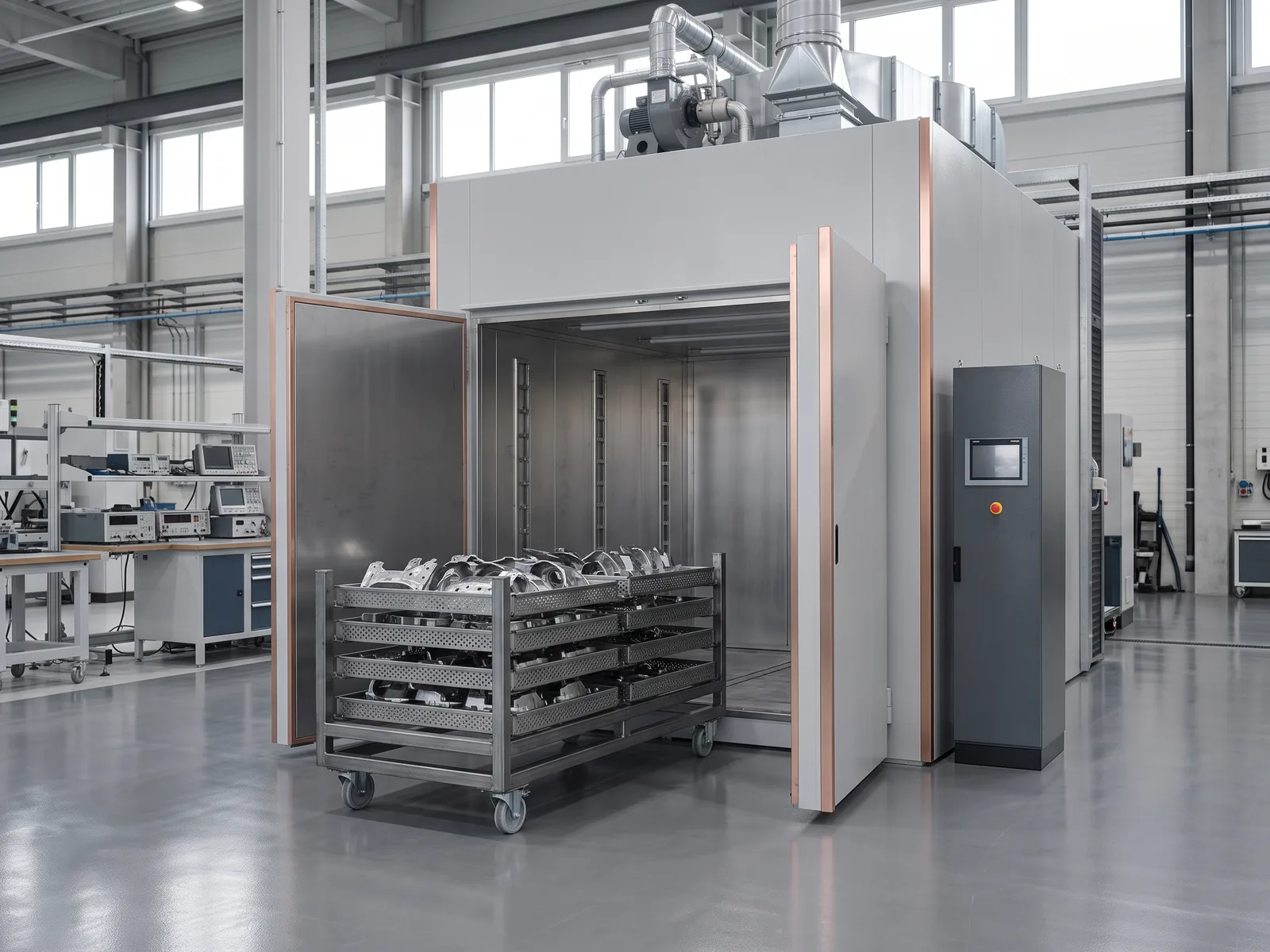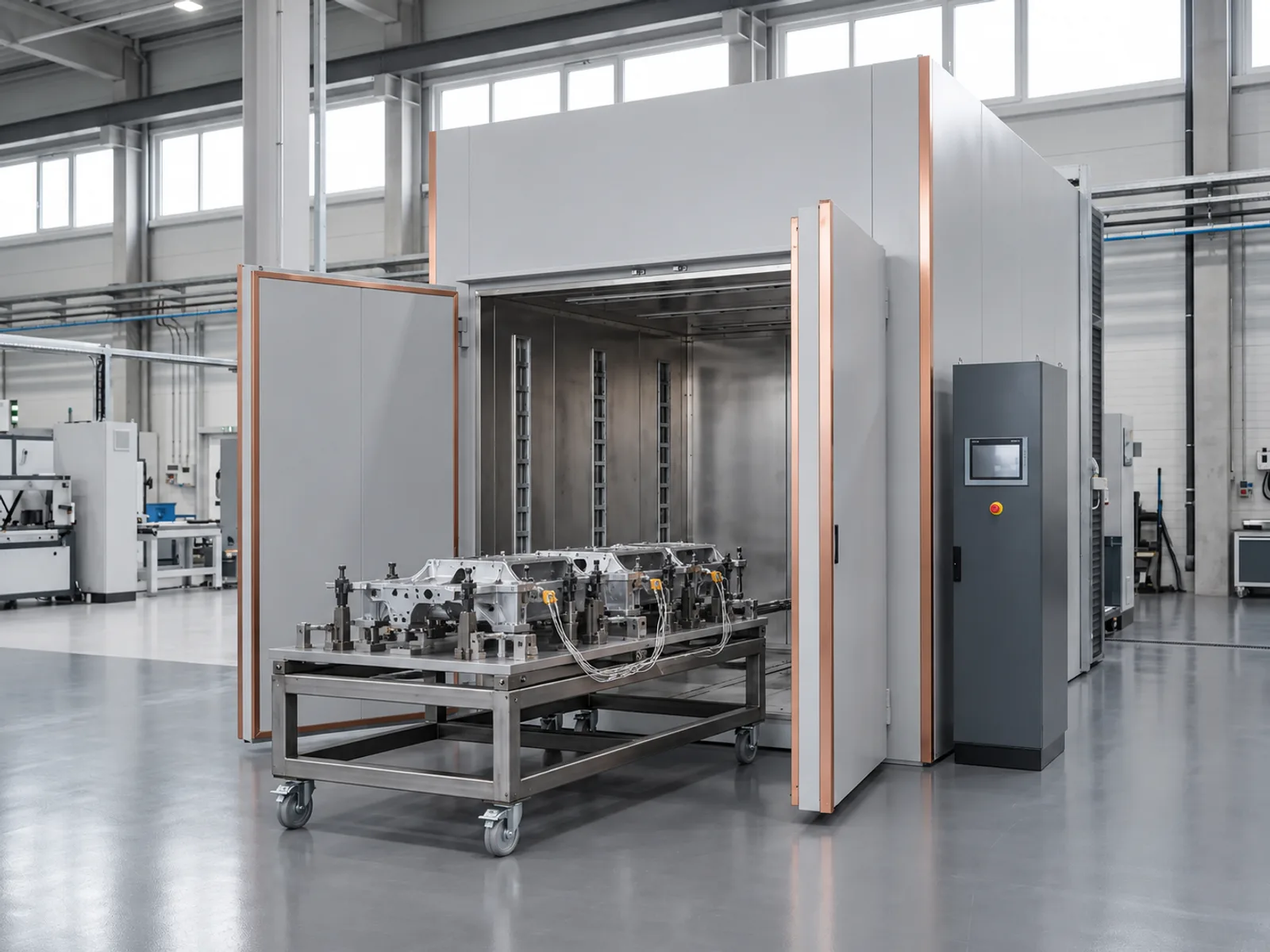
Marble, granite, travertine and engineered stone slabs pass through several water-based and resin-based steps on their way to a finished surface. Slabs are washed and calibrated with water, dried before resin is applied to fill cracks and pores, and the resin then has to cure before polishing. Each of these steps needs controlled heat, and each has to keep pace with the rest of the line.
We design drying ovens, resin curing ovens and thermal systems for this work, as stand-alone units or integrated into automated lines. Oven dimensions, heating configuration, airflow arrangement and control features are engineered according to the slab formats, the resin system and the line's production capacity.
Why the thermal step matters
Water left in the pores and on the surface of a slab can interfere with resin penetration and adhesion, so drying before resining is a quality step, not just waiting time. Resins cure according to their own temperature and time requirements: too little heat can leave the resin soft or tacky at polishing, while uneven or excessive heating can stress the slab or discolour the resin.
Stone is heavy and stores a lot of heat, so slab temperature can lag well behind the air temperature, especially in thick slabs and dense stacks. The oven and the cycle are therefore designed around the slab, not just the air.
Typical processes
- Drying of slabs after washing, calibrating or other water-based operations
- Drying and warming of slabs before resin application
- Curing of epoxy and polyester resins after resining
- Curing of the resin used to bond reinforcing mesh to the back of slabs
- Drying and curing between processing stations in automated lines
- Curing steps in engineered stone production, where the process calls for them
Line integration and handling
In stone processing, the oven is usually one station in a line, so layout and handling are as important as heating:
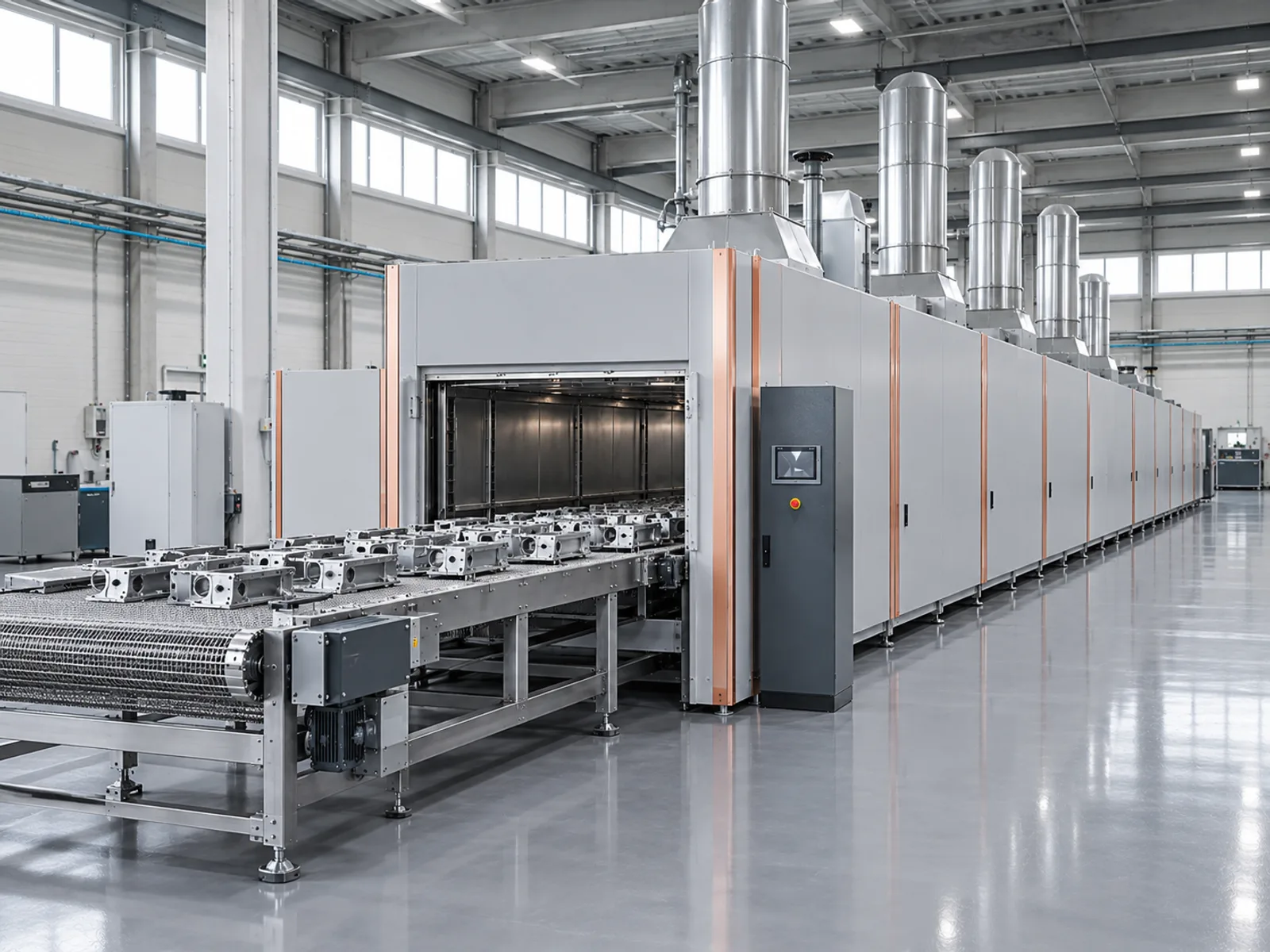
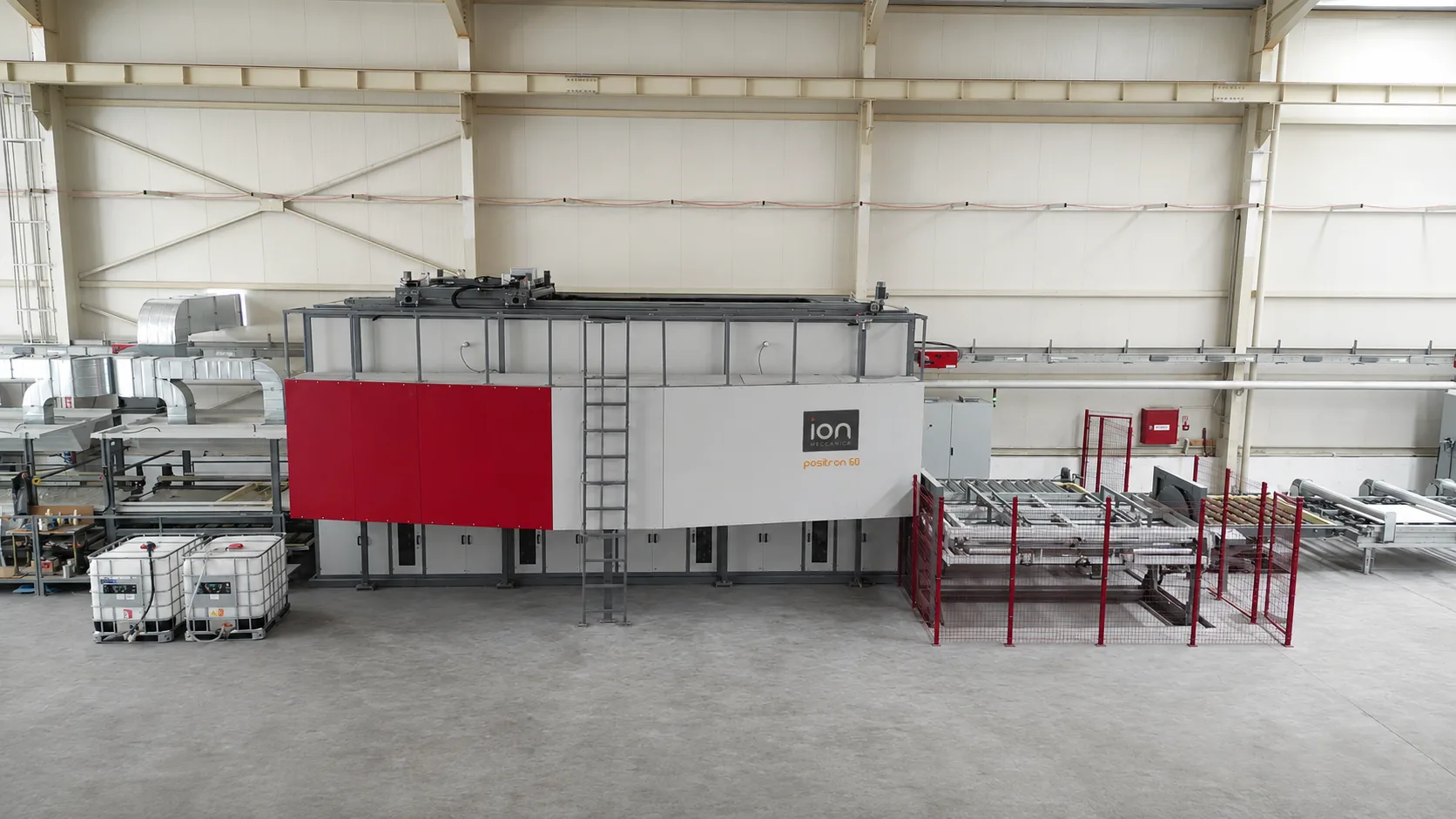
- Layout: continuous conveyor ovens, or cyclic systems in which slabs move in and out of multi-level racks in steps while the resin cures
- Handling: interfaces with roller conveyors, slab loaders and unloaders and resin application stations, sized for your slab formats and weights
- Airflow arranged for slabs lying flat, with airflow, heating and insulation considered together to support uniform temperature distribution
- Moisture extraction in drying zones, and exhaust of resin vapours in curing zones
- Coordination with the line control, so that dwell times can follow the line rhythm
- Depending on the process, a control system configured with programmable temperature profiles, recipe management per resin or slab type, data logging and monitoring functions
- Insulation, door and opening seals, and stand-by modes for line stops
Suitable ION products
Industrial Drying Ovens cover drying after washing and before resining. Resin, Adhesive & Post-Cure Ovens can be configured for resin curing, and Conveyor & Continuous Ovens and Integrated Thermal Process Cells provide continuous or cyclic layouts that link drying and curing to the rest of the line.
How we work with you
Each project starts with a review of your slab formats, materials, resin systems, line layout and target capacity. The oven or line section is then engineered around these requirements and the interfaces with your existing machines.